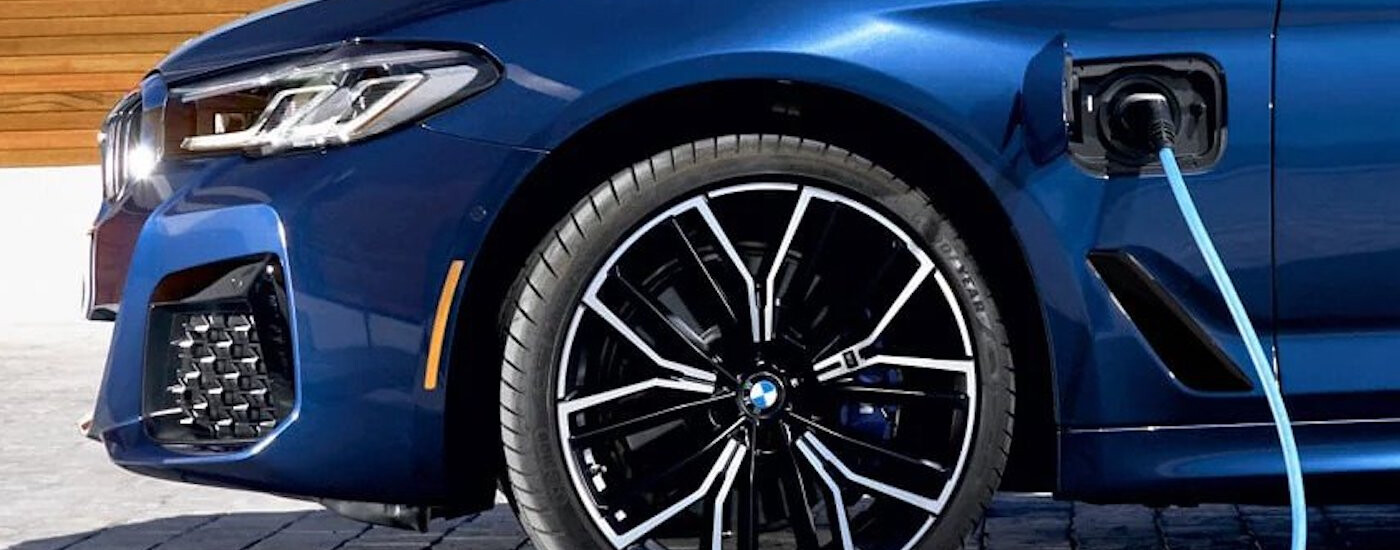
As the electric vehicle market continues to grow, Riverside drivers should familiarize themselves with the different parts of their EVs. One of the most critical parts of an electric model is its charging connector– knowing the type of EV charging connector your vehicle has ensures you can find a charging station compatible with your vehicle, facilitating smooth charging on weekday errand runs or weekend adventures. But, with so many companies making electric cars, trucks, and SUVs, it can be hard to know how many types of EV charging connectors exist.
To help, BMW of Murrieta has compiled this simple EV charging connector guide that goes over all the types of EV charging connectors you can find at home and abroad. Learn more about the most common charging connectors and be on your way to charging your EV around Ontario with confidence!
EV charging connectors are different depending on what part of the world you plan to charge your EV in. For those of us in the U.S., there are three main types of EV charging connectors you’ll find on your electrified model:
Type 1 connectors, also known as an SAE J1772 or J Plug connector, are the primary EV charging connectors for vehicles using Level 1 and Level 2 charging in the U.S. These connectors feature five pins and can support up to 240 volts of input, making them ideal connectors for plug-in hybrid vehicles or smaller electric models.
CCS1 connectors are similar to Type 1 connectors in their five-pin format but add two pins compatible with DC fast charging at the bottom. As a “combined charging system”, this type of EV charging connector can support up to 480 volts of input, allowing for faster charging around the Corona area. All-electric vehicles, like the BMW iX, come with CCS1 connectors for flexible Level 1, Level 2, and DC Fast Charging capabilities.
Tesla connectors are a proprietary type of charger used only for Tesla vehicles and can only be used at Tesla Supercharging stations. While adapters are available, this type of EV charging connector is limited in its use, as most public charging stations use Type 1 or CCS1 ports.
Due to differences in manufacturing and regulations, EV charging connectors outside the United States look a little different. If you plan on traveling out of the country, you’ll likely see connectors such as:
Now that you’ve read BMW of Murrieta’s EV charging connector guide, you’re ready to learn more about electric vehicle ownership! Get all the details about the BMW all-electric lineup available at BMW of Murrieta, and stop by when you’re ready for a test drive. Our team is here to make your transition into electric driving simple, so don’t wait– stop by our Murrieta dealership today and jump into the electric future!